Category: Conservation

  • More Conservation Efforts Required for Eastern Lowland Gorillas

    More Conservation Efforts Required for Eastern Lowland Gorillas

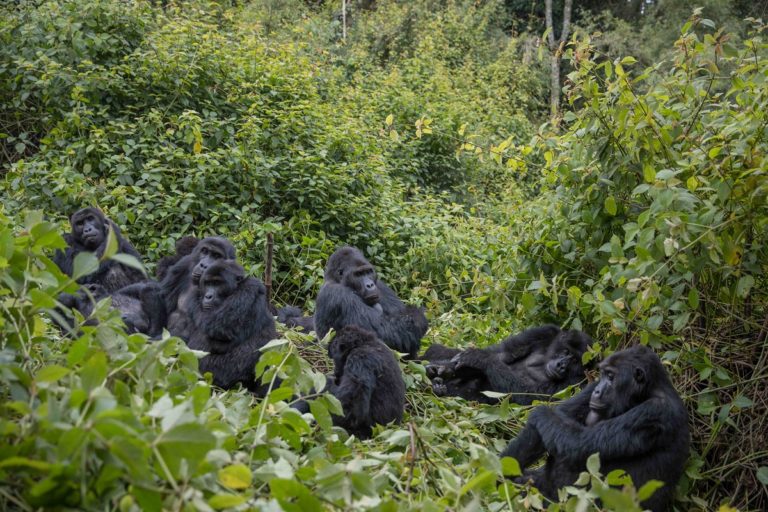
    There are several groups of gorillas in the whole world, which include the western lowland gorillas, the cross-river gorillas, Eastern lowland gorillas and the eastern mountain gorillas; the total of these gorilla groups is approximately 100,000 in the whole world. The mountain gorillas are approximately 880 where as the cross-river gorillas are between 250-300 located in the borders of Nigeria and Cameroon. World wide, gorillas are endangered species and share 95% of human being making them the most close relatives to humans among all other mammals.

    It is believed that there was rapid decrease of gorillas in Democratic Republic of Congo both mountain gorillas in the Virunga National Park and the eastern lowland gorillas in the Kahuzi Biega National Park according to the state of apes report in 2014.

    The rapid decline of the Eastern lowland gorillas in Kahuzi Biega national park was mainly due to civil wars that struck the area out of the Rwanda genocide in 1994 reducing the population of gorillas in the national park from 17,000 to only 2000, most gorillas were shot accidentally, others died in their trying to look for safer areas among others which led to a greater decline.

    More still, even though civil wars came to an end, Democratic Republic of Congo is still not very safe, the armed groups still occupy large parts of the Kahuzi Biega national park and other ape habitats in the country. These armed groups feed on these endangered species, killing them for daily food sources which has led to continued decline of the eastern lowland gorillas in the country.

    In addition, the devastating loss of Eastern lowland gorillas is due to lack of infrastructure (poor roads) connecting to Kahuzi Biega national park, the national park is in the remote areas of democratic republic of Congo which make its accessibility very difficult. Many people have resisted visiting the national park for example there is no gorilla tourism in the park, which would have saved these rare species. Therefore, the lack of accessibility to the national park by the responsible people (tourists) has contributed to the great decline of gorillas in the national park.

    To add on, the illegal mining in the Kahuzi Biega national park has led to the decline of gorillas in the national park, the small scale mining known as the Aka artisanal mining is done in the ecologically sensitive areas of the national park extracting minerals such as gold, tantalum AKA Colton used in electronics, tungsten also used in components for electronics, and tin. This form of mining is unsafe and high destructive to the eastern lowland gorillas since it is un regulated, it is done by a small group of people who move into ecologically sensitive areas to extract minerals. The mining in the national park is seen as one of the few viable options of generating income for these small groups of people in order to support their families and improve their standards of living but in turn, has led to the decline of the rare gorillas.
    Also, the on going pet trade in the Democratic republic of Congo has reduced the number of Eastern low land gorillas in the Kahuzi Biega national park, according to the great ape survival program, the collection and selling of infant apes (gorillas) by the local people and the armed groups in the park is of great loss, these infants are sold to the private buyers and zoo owners in the middle east and Asia after the massacre of family groups. The adults within the gorilla group are first killed for food and meat for selling where as the infants are sold as pets and others to those people with zoos, this trade is illegal and has greatly reduced the population of gorillas in the national park since there is regeneration, adults are killed and infants sold out. Is so unfortunate.

    In conclusion therefore, despite of the devastating decline of the eastern lowland gorillas in the democratic republic of Congo, there is great hope for the increased gorillas in the future, the war came to un end and Congo is now politically stable making is a tourism destination (gorilla tourism) in the national park which is of great importance. Today tourists cross from Rwanda to Congo for lowland gorilla trekking in Kahuzi Biega national park, this is a great income source for lowland gorilla conservation efforts in D.R.Congo. Other support programs both by the government and private organizations are also believed to save these rare endangered species, effective projects, programs and strategies have been put in place and are moving forward to save the rare endangered Eastern lowland gorillas in the Kahuzi Biega national park in the Democratic Republic of Congo.
  • Amazing Facts About Rwanda’s Mountain Gorillas

    Amazing Facts About Rwanda’s Mountain Gorillas

    There can be a few experiences in the world more memorable and magical than an encounter with a mountain gorilla. Rwanda is blessed to be among the few countries that happen to be a home to  the few remaining mountain gorillas in the world. There are thought to be around only 1000 mountain gorillas’ world wide today and all found in small areas of east Africa straddling the boarder of Uganda, Rwanda and Congo with none in the Zoo.

    CONSERVATION HISTORY:

    Rwanda is the premier destination to track these giants besides Uganda’s Bwindi Impenetrable National Park. Oscar Von Beringe a German officer was the first European to encounter the mountain gorillas; he decided that some thing must be done to preserve the population of these magnificent creatures, and in 1925 he persuaded the Belgian government to create Africa’s first protected area , Albert National park(now volcanoes national park). The first scientific study of mountain gorillas in the virunga volcanoes was undertaken by George Schaller in 1959. And later his work was continued by Dian Fossey from 1967 she studied the behaviors of mountain gorillas for a period of over 18 years and her story has been made the subject of her film, Gorillas in the Mist. But she was later murdered in December 1985, most likely by poachers with whom she had made her self very unpopular.

    SIZE :

    Gorillas are one of the largest of the great apes and share about 97% of their biology with human; the other three are chimpanzees, bonobos and orangutans. Great apes are different from monkeys for a variety of reasons; they are larger, walk upright for a longer period of time, don’t have tails and have more developed brains.

    GORILLAS AS A GENUS:

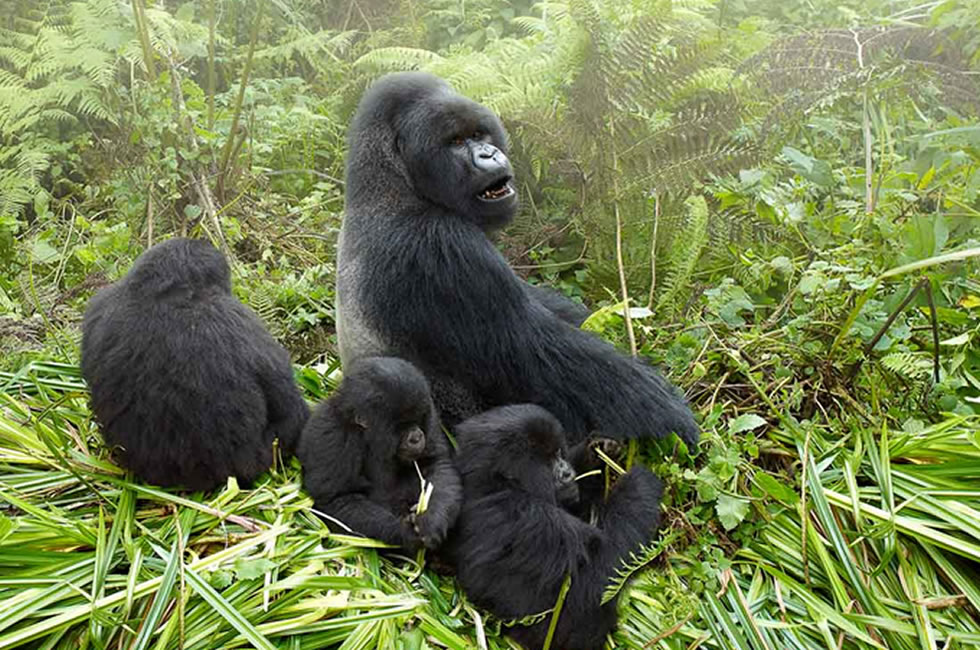
    Gorillas are divided into two species and that is the Eastern Gorillas and the western Gorillas.  Each species is the further divided two tow there by making four subspecies of western lowland gorillas, the eastern lowland gorillas, the mountain gorillas and the Cross River gorilla. Western lowland gorillas inhabit Cameroon, Nigeria, the Central African Republic, the Republic of Congo, eastern DRC, Equatorial Guinea, Gabon and Angola Eastern lowland gorillas are found in part of the eastern Democratic Republic of Congo (DRC), and sometimes visit the areas one borders of  Uganda and Rwanda with D. R. Congo, while Mountain gorillas can only be found in the forest of Bwindi Impenetrable Forest in Uganda and the slopes of Virunga volcanoes in Rwanda. The mountain gorillas are distinguished from there lowland relatives by there broader chest, longer black fur , and a wider jaw, they also tend to be a bit larger than other gorillas and as their name suggests, they can only be found in Forested Mountains.

    MOUNTAIN GORILLA TRACKING:

    Rwanda has the easiest groups to track in the Virunga volcanoes as it’s a 3hours drive from Kigali, the capital of Rwanda. And the habituated gorilla groups are a little easier to reach from Rwanda side, than those living in the same mountain range in Uganda and the democratic Republic of Congo (just a cross the boarder). Although however much it’s easy to reach to the gorillas in Rwanda, tracking gorillas takes some effort. The bush is thick with stinging and burning nettles, the slopes of the mountains are steep and muddy. But all this is unforgettable for the one hour you spend with this giant species as they are fabulous fan to watch while doing their daily activities.

    BEHAVIOR AND SAFETY OF MOUNTAIN GORILLAS:

    Mountain gorillas are shy, but when in danger, they can be aggressive. They beat their chests and let out angry grunts and roars. Group leaders will charge at the threat. Mothers will fight to death to protect their young ones. And the silverback will strongly fight to protect the group. Mountain gorillas of Rwanda live in groups of up to 6-12. The group is led by a single male, called silverbacks because of the distinctive silvery fur growing on their back and hips when they mature at least 12 years olds , these silverback scares away other animals by standing on their back legs they  decide all activities within their troop. They schedule feeding trips, resting time, and travel. These troops also include several younger males, adult and juvenile females, and infants. Females always give birth at about 10 years and will have more offspring every three or four years and give birth after an 8.5-month gestation period ad it produce a single young, twine cases are so rare in gorillas. A male gorilla begins to breed between 12 and 15 years, when he is in charge of his own group. Young male gorillas called blackbucks usually leave their family group when they are about 11 years old and have their own family group by the age of 15 years old. Young female gorillas join a new group at about 8 years old.
    A Fully-grown male mountain gorilla can weigh up to 180 kg (400 lb). Females weigh half that at about 90 kg (200 lb)

    DIET

    ; Gorillas although eat a variety of plants, favorites include wild celery, bamboo, thistles, stinging nettles, bedstraw and certain fruit. These plants seem to provide sufficient moisture so that gorillas do not need water. And they are known to be herbivores as they spend most of their day foraging for food
    These species live between 40 to 50 years and an adult gorilla is about 1 meter tall to their shoulders when walking on all fours using their arms and their legs.
    There are 9 gorilla groups in Rwanda these include the Susa, Group 13, Kwitonda, Amahoro, Karisimbi, Sabyinyo, Agashya, Omubano, Hirwa.

    Threats

    Gorillas are threatened by human activities such as poaching for the bush meat and diseases like Ebola, wild animals like lion, leopards also attack and kill most especially the young gorillas. They are also affected by climate change especially that live in higher elevations like mountains.

    Why not plan your rwanda gorilla tour today and support Gorilla conservation in the Wild in Rwanda today for future generations.